Dental laboratories have more manufacturing options available than ever before.
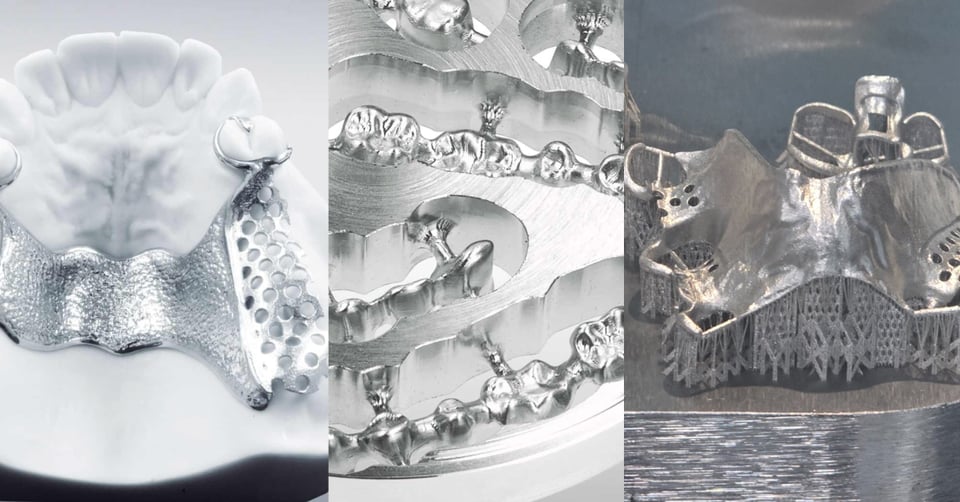
Traditional casting remains a proven method for many frameworks and restorations. CAD/CAM milling has become a reliable pathway for precise digital production. Laser melting is opening new opportunities for complex geometries, production efficiency and digital scalability.
But for many labs, the key question is not simply which technology is available.
It is: Which material format is right for this case, ingot, blank or powder?
For dental laboratories working with Chrome Cobalt (CoCr) and Titanium (Ti), choosing between casting, milling and laser melting can influence fit, strength, workflow efficiency, material use and consistency.
Dentaurum supports laboratories with a complete material system across CoCr and Titanium alloys, including ingots, CAD/CAM blanks and powders for laser melting.
Why material choice matters in the dental lab
.png?width=400&height=400&name=Untitled%20design%20(12).png)
In a busy dental laboratory, material choice is never just a technical detail. It affects how efficiently the case can be produced, how consistently the team can repeat results, and how confidently the final restoration or framework can be delivered, and all in what volumes and level of urgency.
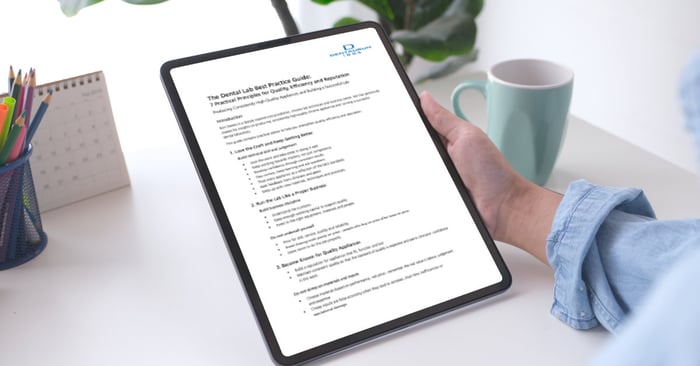
Strong labs understand materials science, not just processing steps. The Dental Lab Best Practice Guide notes that dental labs should understand how materials behave, how handling and processing affect fit, strength and durability, and how technical knowledge can reduce guesswork if problems occur.
Material quality, consistency and system compatibility are also important in digital workflows. Powering Digital Dentistry with Dentaurum CAD/CAM Materials states that as CAD/CAM workflows become more sophisticated, material quality, repeatable consistency and system compatibility are vital to achieving reliable, trusted results.
That is why the choice between casting, milling and laser melting should be made with both the case and the laboratory workflow in mind.
Casting: proven, familiar and still highly relevant
Casting remains an important production method for many dental laboratories, particularly those with established analogue workflows and experienced technicians.
Casting may be suitable for:
-
removable partial denture frameworks
-
crown and bridge work
-
metal frameworks
-
lower-volume production
-
laboratories with existing casting equipment and processes
The benefit of casting is familiarity. Many technicians understand the process deeply and can achieve consistent results when materials, equipment and procedures are well controlled.
For labs focused on traditional production methods, Dentaurum offers Model Casting Materials and a wide range of ingot Dental Alloys.
When casting makes sense
Casting may be the right choice when:
-
the lab already has strong casting expertise
-
production volumes do not justify a fully digital workflow
-
the case suits conventional framework production
-
the team has reliable, repeatable processes in place
However, casting still depends heavily on technician skill, process control and material understanding. As The Dental Lab Best Practice Guide notes, strong labs make quality repeatable by using clear processes, reducing variation and tracking rework.
Milling: precision and repeatability in digital workflows
CAD/CAM milling is well suited to laboratories looking for consistency, accuracy and repeatable digital production.
Milling may be suitable for:
-
crown and bridge frameworks
-
implant-supported restorations
-
partial denture frameworks
-
digital production workflows
-
repeat case types
-
mid/higher-volume production environments
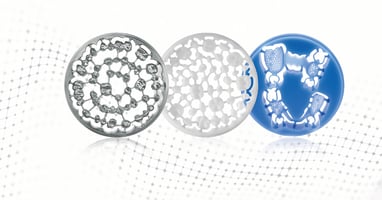
Dentaurum’s CAD/CAM material positioning in Powering Digital Dentistry with Dentaurum CAD/CAM Materials highlights a system-based approach across digital workflows, from milling and laser melting through to finishing and veneering.
For laboratories, milling can help reduce some of the variability associated with manual production, provided the material, machine, design process and finishing workflow are all aligned.
When milling makes sense
Milling may be the better option when:
-
the lab wants a repeatable digital workflow
-
case designs are suited to subtractive manufacturing
-
consistent machining behaviour is important
-
the laboratory is producing similar indications regularly
Laser melting: where powders become particularly important
Laser melting is one of the most valuable areas for labs exploring advanced digital production, and it's growing rapidly.
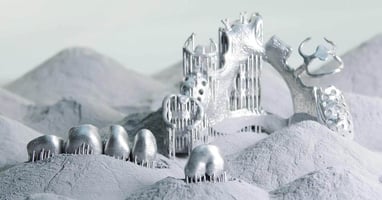
Unlike casting or milling, laser melting uses metal powder to build parts layer by layer. This makes it especially useful for complex geometries, efficient nesting and modern digital manufacturing workflows.
This is where Dentaurum’s CoCr and Titanium powders become particularly relevant.
Dentaurum’s metal powders are specifically formulated for laser melting in dental applications, supporting prosthetic and orthodontic manufacturing.
Labs can explore Dentaurum’s Powders for Laser Melting, including CoCr and Titanium options.
CoCr powder: supporting efficient additive manufacturing
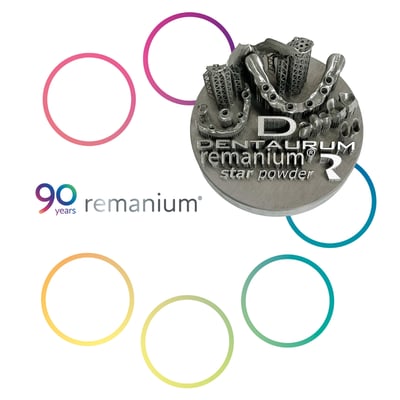
CoCr remains a widely used dental alloy because of its strength, durability and suitability across a range of prosthetic indications.
Dentaurum’s remanium® star powder is a cobalt-chrome alloy powder designed for laser melting and additive manufacturing. It is compatible with standard laser-melting systems and suitable for crowns, bridges, partial dentures and metal-ceramic frameworks.
For labs, the value of CoCr powder is not just the material itself. It is the ability to integrate CoCr into a digital workflow while maintaining consistency across production.
CoCr powder may be helpful when the lab wants to:
-
produce complex frameworks
-
move more production into digital workflows
-
improve workflow consistency
-
supports orthodontic, partial denture and crown and bridge applications
-
reduce reliance on purely manual production steps
-
clearly more than viable for multiple cases simultaneously
Titanium powder: lightweight strength for advanced workflows
Titanium is valued in dental manufacturing for its combination of biocompatibility, corrosion resistance and strength-to-weight ratio.
Dentaurum’s rematitan® powder is a titanium powder supporting additive manufacturing where titanium’s biocompatibility and strength are essential.
For laboratories, Titanium powder can be useful where a lightweight and strong material is required within a digital production workflow.
Titanium powder may be helpful when the lab wants to:
-
produce lightweight frameworks
-
work with titanium in a digital workflow
-
support complex framework structures
-
expand additive manufacturing capabilities
Casting vs milling vs laser melting: a practical lab comparison
|
Lab priority |
Method to consider |
Why it may suit |
|
Established analogue workflow |
Casting |
Familiar process for experienced technicians |
|
Lower equipment change |
Casting |
Can suit labs already set up for conventional production |
|
Repeatable digital production |
Milling |
Supports consistent CAD/CAM workflows |
|
Regular crown and bridge production |
Milling |
Well suited to predictable digital case types |
|
Complex framework design |
Laser melting |
Powder-based additive manufacturing supports complex geometries |
|
Digital workflow expansion |
Laser melting |
Helps labs move further into additive manufacturing |
|
CoCr framework production |
Casting, milling or laser melting |
Method depends on case type, equipment and workflow |
|
Titanium digital production |
Milling or laser melting |
Useful for labs working with titanium in digital workflows |
The most useful answer is rarely “one method is best”. For many laboratories, the strongest approach is having access to the right material format for the right case, with the right expertise and workflow volumes.
That may mean CoCr ingots for casting, CoCr or Titanium blanks for milling, and CoCr or Titanium powders for laser melting. That said, it very clear that the take-up of laser melting is now outstripping other options. Laser melting can suit both orthodontic and prosthetics requirements and the number of laser melting device manufacturers and their cost-effective model options are increasing at a great rate.
A practical way to choose the right material format
Before selecting ingots, blanks or powder, labs should ask:
- What is the indication?
Is the case a crown, bridge, partial denture, implant framework or another structure?
- What workflow is already strongest in the lab?
A lab with strong casting expertise may make a different decision from a lab already set up for laser melting.
- How complex is the design?
Complex structures may be better suited to digital workflows, depending on equipment and case requirements.
- How important is repeatability?
Repeatable processes are central to quality and efficiency. Strong labs build simple, repeatable processes and reduce variation wherever possible.
- Is the lab planning for future growth?
Labs building digital capacity may benefit from considering powders / additive manufacturing as part of their long-term production strategy. This enables cost-effective, higher volume outputs without high labour costs or input.
Dentaurum materials for traditional and digital lab workflows
Dentaurum’s range supports laboratories across both traditional and digital manufacturing pathways, including:
-
CoCr casting alloys
-
Titanium materials
-
CAD/CAM blanks
-
CoCr & titanium powders
This gives labs the flexibility to choose the material format that suits the case, equipment and the production workflows.
Explore:

Final recommendation for labs
The best material choice is the one that supports the case requirements, the installed or planned equipment, technician’s workflow, related case volumes and the lab’s quality standards.
Casting remains valuable for proven conventional production. Milling supports repeatable digital workflows. Laser melting powders offer new possibilities for additive manufacturing, especially where complexity, scalability and digital efficiency are priorities.
For labs working with CoCr and titanium, Dentaurum’s range of ingots, blanks and powders provides a practical way to support both established techniques and future-focused digital production.
In the end, better outcomes start with better material decisions.
Exclusive Download
The Dental Lab Best Practice Checklist:
7 Practical Principles for Quality, Efficiency and Reputation